Engineering vs. Decorating: The 10 Tough Questions Most Contractors Can't Answer
Discover the 10 critical technical questions to ask your contractor—from LSL framing to flood tests—to ensure your renovation is engineered, not just decorated.
The "Lemon Renovation."
It looks pristine on the final walkthrough. The paint is fresh. The tile shines. The contractor shakes your hand and leaves.
Six months later, the grout cracks in the shower.
Twelve months later, the cabinet doors start to rub because the wall behind them has warped.
Two years later, you notice a water stain on the ceiling below the master bath.
This is the difference between Decorating and Engineering.
Most contractors are decorators. They focus on the surface—what you can see. At BlueBlock, we focus on the substrate—what you can't see. We believe that "Visual Silence"—that feeling of perfection in a room—is not purchased; it is engineered.
If you are interviewing contractors for a significant renovation, do not ask them if they are "good." Ask them these 10 technical questions. If they stumble, hesitate, or tell you "it doesn't matter," walk away.
1. The Physics of Framing: The Warping Wall
Question: "Do you use LSL studs for kitchen and millwork walls, or standard dimensional lumber?"
- The Wrong Answer: "We just follow the existing framing. It's an old house; walls are never straight."
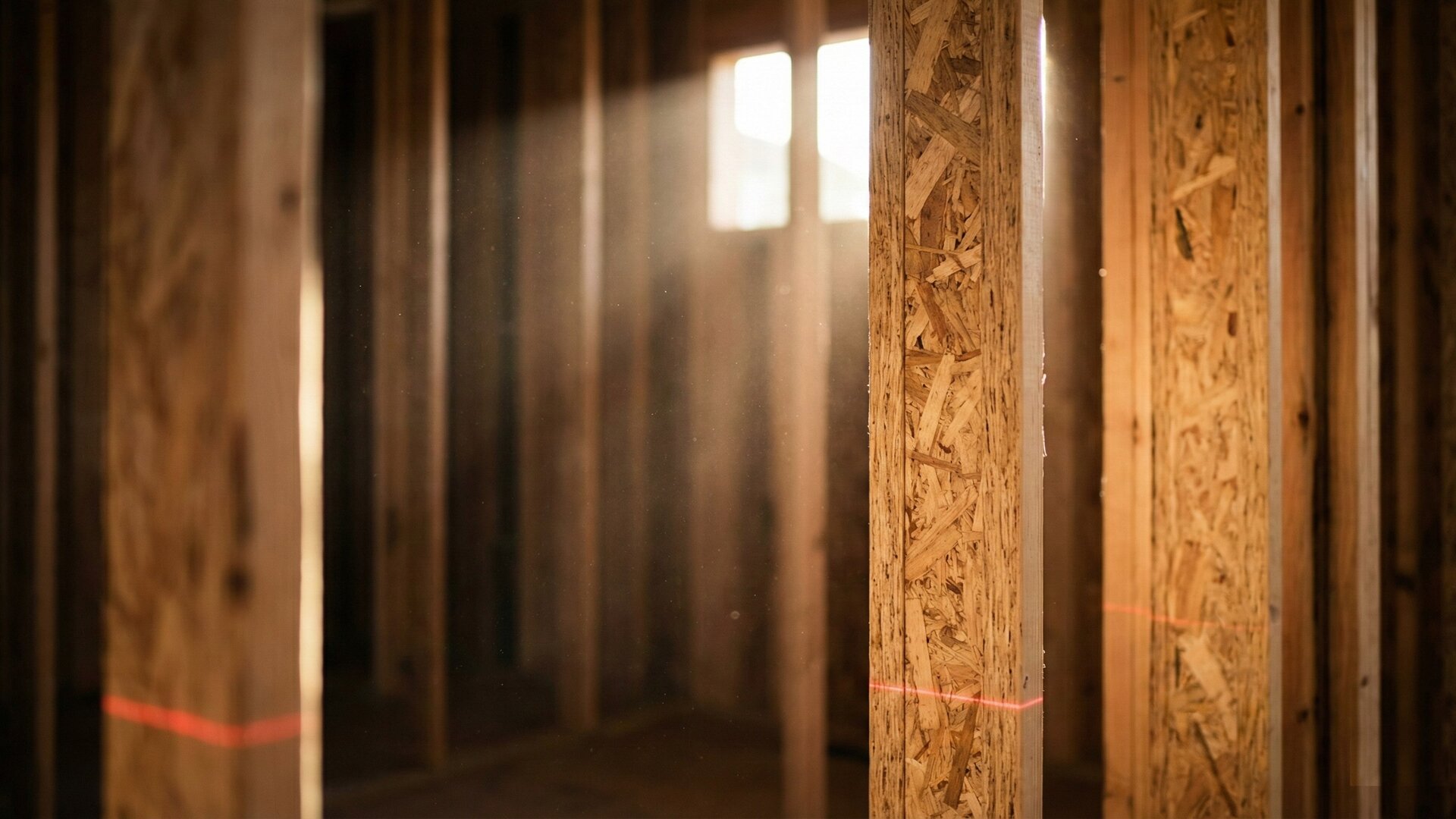
- The BlueBlock Standard: High-end cabinetry is precision-engineered furniture. Standard lumber (Spruce/Pine/Fir) is a biological sponge; it holds 15-19% moisture and shrinks as it dries, twisting your walls. We use Laminated Strand Lumber (LSL) studs in all kitchen and millwork areas. LSL is engineered at 6-8% moisture content. It does not shrink. It does not warp. It provides a dead-flat plane for your investment.
2. Water Management: The End of the Hot Mop
Question: "Do you use a hot mop/mortar bed system or a sealed bonded system?"
- The Wrong Answer: "We hot-mop it. It's how we've always done it."
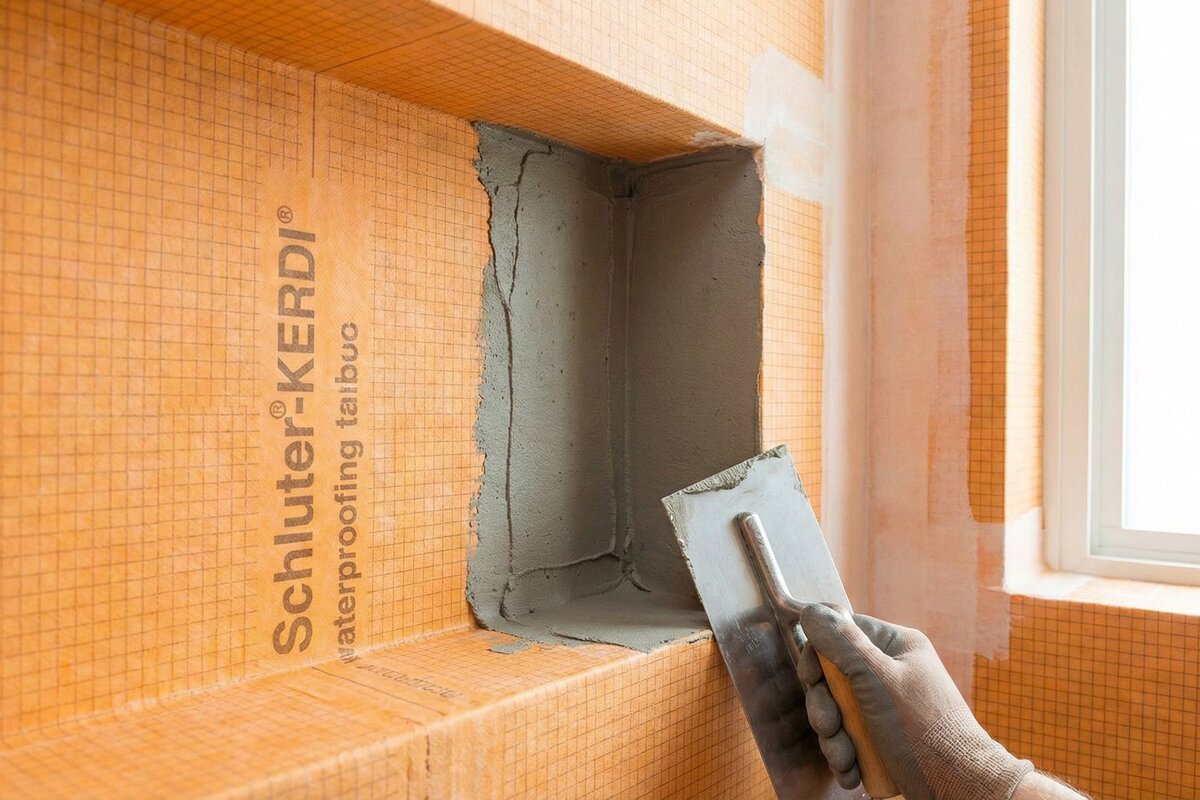
- The BlueBlock Standard: The "Hot Mop" is a roofing technique from the 1920s. It allows water to saturate the mortar bed, creating a permanent breeding ground for mold under your tile. We exclusively use sealed systems like Schluter-KERDI or Wedi. These are vapor-impermeable envelopes that bond directly to the drain. The water hits the tile and drains. The substrate never gets wet.
3. The Geometry of Tile: Lippage and Planarity
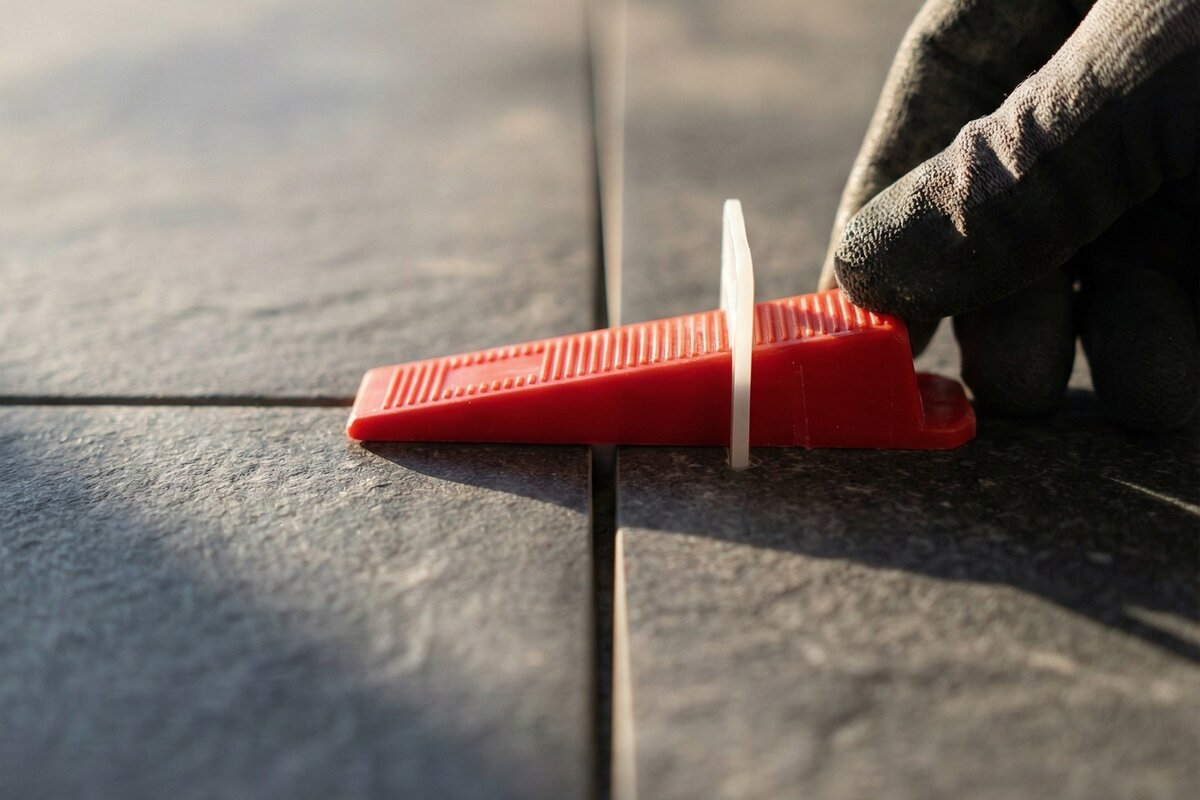
Question: "Do you use mechanical leveling clips for all large-format tile?"
- The Wrong Answer: "I've been setting tile for 20 years; I do it by feel."
- The BlueBlock Standard: "Feel" is not a measurement. Porcelain tiles warp during firing. We use mechanical leveling clips (like Raimondi or Spin Doctor) that lock adjacent tiles into a perfectly flat plane while the mortar cures. This eliminates "lippage" (uneven edges) and ensures a flawless, glass-like surface in accordance with ANSI A108.02.
4. The Chemistry of Grout: Permanence vs. Porosity
Question: "Do you use standard sanded grout or high-performance epoxy/cementitious grout?"
- The Wrong Answer: "Standard sanded grout is fine. We'll seal it."
- The BlueBlock Standard: Standard grout is porous cement. It absorbs urine, oils, and soap scum, leading to permanent staining. We specify Epoxy Grout (e.g., Laticrete Spectralock) for wet areas. It is a thermosetting polymer—impervious to water, stain-proof, and chemical resistant. It costs more to install, but it lasts forever.
5. Acoustics and Stability: The Subfloor Protocol
Question: "How do you fasten the subfloor?"
- The Wrong Answer: "We nail it down."
- The BlueBlock Standard: Nails loosen over time as wood dries. That is why old floors squeak. We use the "Screw and Glue" method: heavy-duty polyurethane construction adhesive combined with screws. This creates a monolithic subfloor assembly that acts as a T-beam. It will never squeak, creak, or move.
6. The Definition of Smooth: Level 5 Drywall
Question: "Do you bid Level 4 or Level 5 drywall finish for high-gloss or critical lighting areas?"
- The Wrong Answer: "Standard smooth finish."
- The BlueBlock Standard: A standard "Level 4" finish leaves the paper face of the drywall exposed, which has a different texture than the joints. When light hits it, you see the seams. We mandate a Level 5 Skim Coat for critical walls—covering the entire surface in compound to create a uniform, plaster-like canvas for your paint.
7. Millwork Precision: Scribing vs. Caulking
Question: "Do you scribe cabinets to the wall, or do you use caulk to hide the gaps?"
- The Wrong Answer: "Caulk hides the gap."
- The BlueBlock Standard: Caulk shrinks, cracks, and discolors. We demand Scribing—a carpentry technique where the wood is hand-cut to match the exact curvature of your wall. The connection is seamless and mechanical, not cosmetic.
8. Environmental Control: The Silica Protocol
Question: "Do you use HEPA air scrubbers and negative air pressure during demolition?"
- The Wrong Answer: "We put up a plastic sheet and sweep up."
- The BlueBlock Standard: Construction dust contains Respirable Crystalline Silica (RCS), a known carcinogen. We deploy BuildClean HEPA air scrubbers to filter the air 6-10 times per hour and create negative pressure zones. We don't just protect your furniture; we protect your lungs.
9. Financial Engineering: The Change Order Trap
Question: "Do you offer a fixed-price contract?"
- The Wrong Answer: "We'll figure out the allowances later."
- The BlueBlock Standard: Low bids are often a trap, filled with "Allowances" that are too low to buy real materials. We do investigative demolition and demand upfront material selection before the contract is signed. Our goal is a Fixed Price scope. If we miss something on the plans that should have been obvious, we own it.
10. Verification: The Flood Test
Question: "Do you perform a mandatory 24-hour flood test on all shower pans?"
- The Wrong Answer: "We trust our work."
- The BlueBlock Standard: Trust is not engineering. We plug the drain and fill every shower pan with water for 24 hours before a single tile is set. If the water level drops, we find the leak. We do not tile over hope. We tile over proof.
Conclusion: The Value of Permanence
The difference between Engineering and Decorating is the difference between an asset and a liability. A decorated home looks good for the listing photos. An engineered home looks good for the next twenty years.
The protocols outlined in this report—LSL framing, epoxy grout, HEPA filtration—carry a cost. But this cost is an investment in permanence.
Don't gamble on your home. Engineer it.
Book a Technical Feasibility Consult
Technical References & Standards
- ANSI A108.02: General Requirements: Materials, Environmental and Workmanship. (Referenced in Point 3: Lippage Control).
- TCNA Handbook Method B415: Shower Receptors - Bonded Waterproof Membranes. (Referenced in Point 2: Water Management).
- APA – The Engineered Wood Association: Moisture Content and Dimensional Stability of Laminated Strand Lumber. (Referenced in Point 1: Framing).
- OSHA Standard 1926.1153: Respirable Crystalline Silica in Construction. (Referenced in Point 8: Environmental Control).
🖨️ Taking this to your next site meeting?
We condensed these 10 protocols into a single-page "Forensic Vetting Checklist" that you can print out and bring to your contractor interviews.
📥 Download The BlueBlock Audit Checklist (PDF)No email required. Just the standard.
Ready to Build?
If you're ready to start a project, we can help — get a free quote or talk through options with our team.